
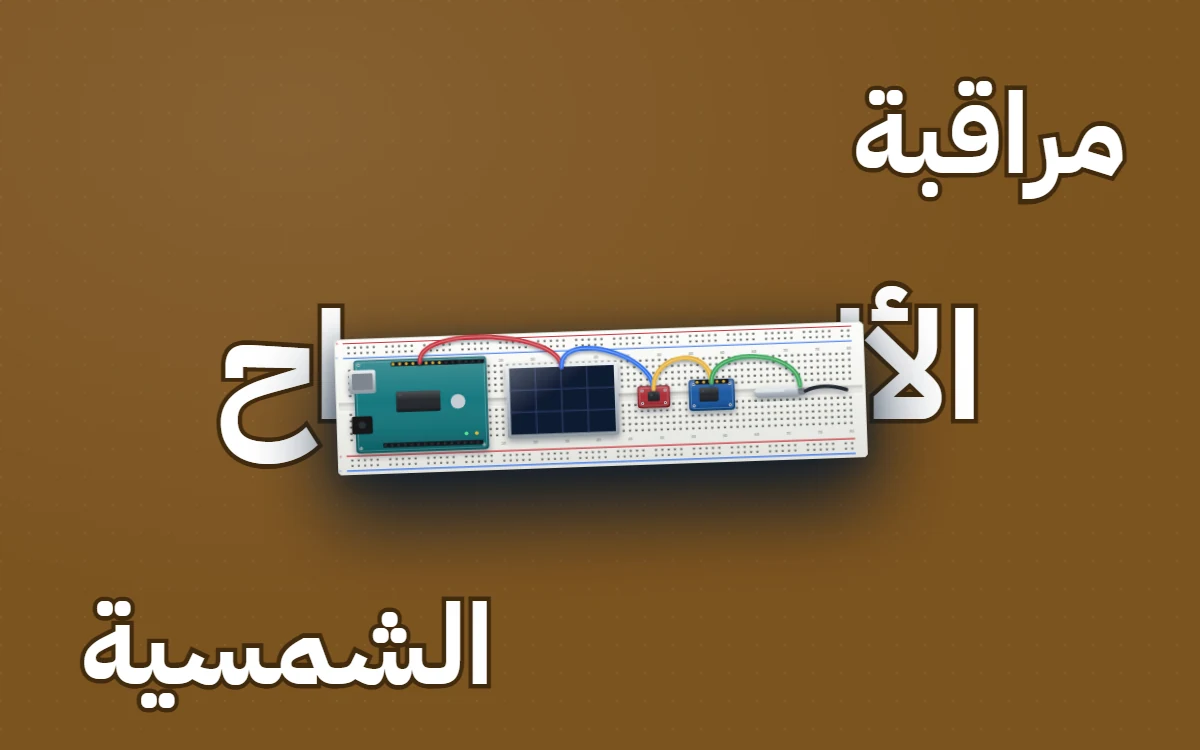
Solar panel performance monitoring
The system measures the panel's output and compares it with the expected output for the light level and temperature, detecting dust, shading, and weak connections before their effect shows on the electricity bill.
The problem
Jordan has one of the highest rates of solar panel use in the region, and most panels run with no monitoring at all. A dusty panel loses a big share of its output without the owner noticing, because the system appears to be running. The decline is gradual, with no clear moment of failure, but the electricity bill doesn't drop as much as expected. Continuous measurement reveals the difference between a system that works and one that works at full efficiency.
How it works
- MeasurementThe voltage and current sensors read the panel's output continuously.
- AccountThe controller multiplies the two values to get instantaneous power and cumulative energy.
- Reference valuesThe light and temperature sensors determine the expected output under current conditions.
- ComparisonA large gap between actual and expected output indicates a fault, not a weather condition.
- AlertsA notification identifies the likely type of fault: dust, shading, or a weak connection.
- FollowingThe dashboard shows the daily and monthly output curve and the efficiency rate.
Project features
- Comparing actual output with expected output is more useful than showing a single number, and makes the project stand out clearly to the committee.
- Closely tied to the Jordanian context, where solar energy is widely used while maintenance is neglected.
- Tangible results in dinars, by calculating the kilowatts lost to dust.
- An easy live demo: covering part of the panel is enough to trigger the alert.
- It can expand to several panels and pinpoint the faulty one.
Parts
All the parts you need in one place. Remove what you already have, and swap parts to fit your budget. Parts with a photo are available in our store at their current price.
Prices are estimates and may change. Parts marked “other supplier” are ordered outside our main store.
Expected challenges
These are the main obstacles to expect during the build, laid out clearly so you know them before you start.
- Measuring DC current accurately requires a suitable sensor and calibration.
- Expected output relies on a formula combining light and temperature.
- Panel temperature differs from air temperature, so a sensor attached to the panel is needed.
- Partial shading reduces output non-linearly and can confuse the comparison.
- The measurement unit must be powered without drawing from the panel it measures.
The consultation gives you a solution for each one.
Expected committee questions
Prepare your answers in advance: these questions come up often in defenses of similar projects.
- How is the panel's expected output calculated from light and temperature?
- How are dust, shading, and a weak connection told apart from the readings?
- How does panel temperature affect its efficiency?
- What percentage difference triggers the alert, and why was it chosen?
Similar projects
Projects close to this one in idea or parts. Check the differences before deciding, and borrow ideas you can add to your own project.
Students' experiences
Add a comment on the idea: +2 points. Or share your experience with photos of your build: +10 points. Every 50 points become a JD 5 discount voucher on parts orders.
Need solutions to the challenges and a complete technical path?
In the consultation we give you a solution for each challenge above, plus a practical build plan from the first step to the last: technologies, libraries, wiring diagram, timeline, and tips for the defense.
- Consultation session
- PDF with solutions and a plan
- 20 د.أ فقط