
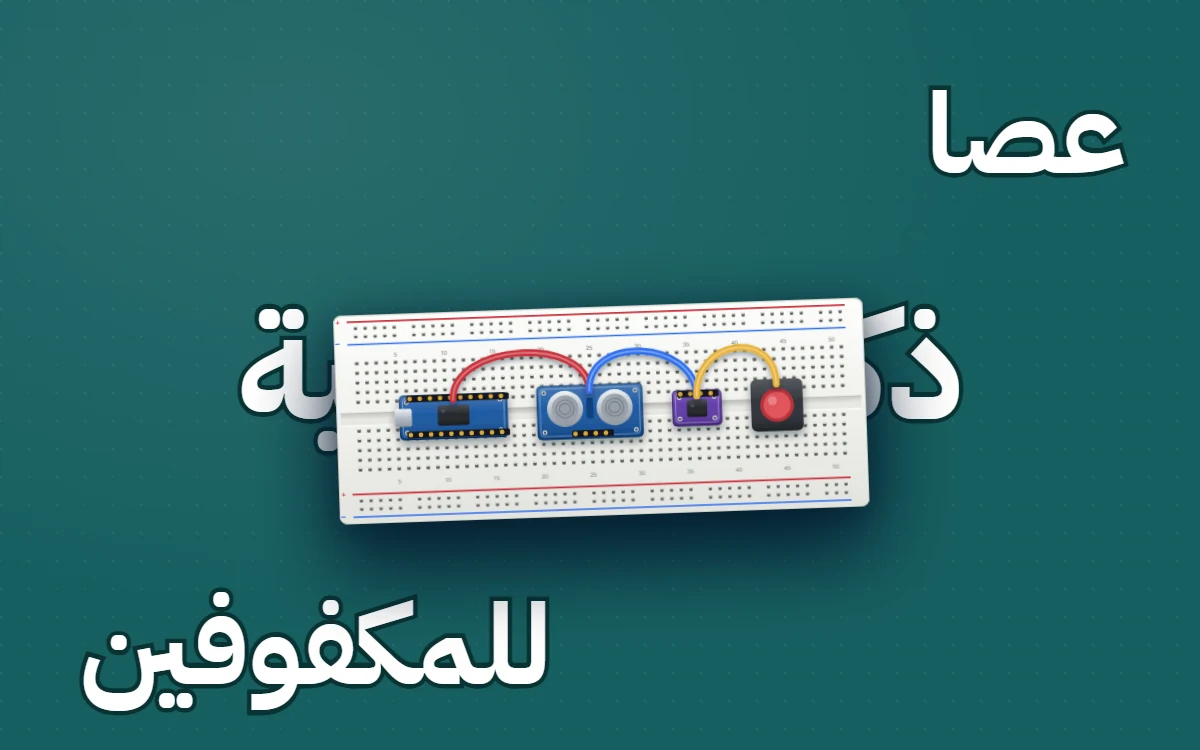
Smart cane for the blind with vibration alerts
The cane detects obstacles at head and chest level, such as signs, branches, and open doors, and alerts the user by vibration instead of sound, because hearing is their most important sense.
The problem
A white cane only checks the ground, so it never touches obstacles at chest and head level — low signs, tree branches, open doors, truck mirrors — and the user walks straight into them; these are among the most common street injuries for blind people. A sound alert isn't a good answer either, because a blind person relies on hearing to perceive their surroundings and any extra sound distracts that key sense; the alert has to be tactile.
How it works
- Upper scanA forward-facing distance sensor detects obstacles at chest and head level.
- Ground scanA second, downward-facing sensor detects holes and sudden steps.
- GradationThe vibration gets stronger as the obstacle gets closer, so the user feels the distance in their hand.
- Water detectionA dedicated sensor detects puddles and wet floors before a slip.
- Fall detectionThe motion unit picks up a fall of the user or of the cane.
- SOSA fall or a press of the button sends the user's location to pre-registered numbers.
Project features
- Alerts by vibration, not sound, because hearing is the user's most important sense.
- It detects overhead obstacles a traditional cane can't detect at all.
- The strength of the vibration conveys the full distance information without a word.
- The SOS button and fall detection add a level of safety that lets the user get around alone.
- It's cheap, and all its parts are available locally.
 Preparing the interactive model…
Part models from the libraries KiCad andEspressif (CC-BY-SA 4.0), lighting from Poly Haven. Click any part's name to zoom in on it.
Parts
All the parts you need in one place. Remove what you already have, and swap parts to fit your budget. Parts with a photo are available in our store at their current price.
Prices are estimates and may change. Parts marked “other supplier” are ordered outside our main store.
Expected challenges
These are the main obstacles to expect during the build, laid out clearly so you know them before you start.
- The distance sensor's signal bounces off slanted surfaces, so it can miss real obstacles.
- The mounting angle of the two sensors decides the success of the whole project.
- Too many alerts on crowded streets may make the user switch the device off.
- The cane's weight and balance: any extra weight tires the hand within minutes.
- The battery must last a full day out of the house.
The consultation gives you a solution for each one.
Expected committee questions
Prepare your answers in advance: these questions come up often in defenses of similar projects.
- Why was vibration chosen instead of sound?
- How are head-level obstacles detected that a traditional cane misses?
- How does the vibration scale with distance?
- Was the cane tried with a blind person, and what was their feedback?
Similar projects
Projects close to this one in idea or parts. Check the differences before deciding, and borrow ideas you can add to your own project.
Students' experiences
Add a comment on the idea: +2 points. Or share your experience with photos of your build: +10 points. Every 50 points become a JD 5 discount voucher on parts orders.
Need solutions to the challenges and a complete technical path?
In the consultation we give you a solution for each challenge above, plus a practical build plan from the first step to the last: technologies, libraries, wiring diagram, timeline, and tips for the defense.
- Consultation session
- PDF with solutions and a plan
- 20 د.أ فقط