
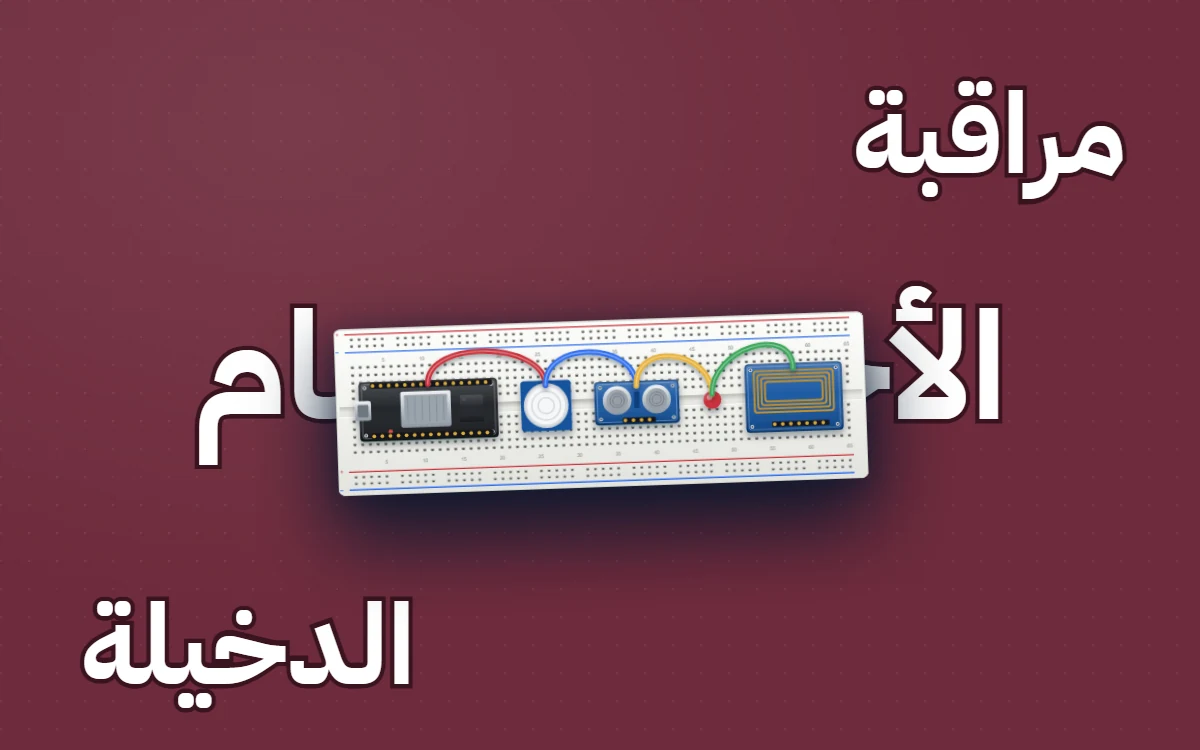
Night surveillance system for detecting intruding objects
A system built for night work that watches a defined area; when any object enters, it captures a photo at the moment of entry and sends it to the dashboard with the time and place.
The problem
Night surveillance suffers from one of two things: a camera recording twelve hours nobody reviews, or a motion sensor that alerts on every passing animal and gets switched off within a week. What's needed is a system that only alerts when something warrants it: an object entering a defined zone, at a defined time, with a photo proving the event. Review becomes precise instead of hours of uneventful footage.
How it works
- TimingA light sensor determines whether it's night or day, and the system runs at night.
- MonitoringThe motion and distance sensors watch the predefined zone.
- ConfirmationBoth sensors must agree before an event counts, which reduces false alarms.
- ImagingInfrared lights illuminate the scene, and the camera takes the photo.
- RecognitionWhen an ID card is carried, the system recognizes the authorized person and doesn't raise an alarm.
- UploadThe photo, time, and zone are sent to an online dashboard.
Project features
- It only takes photos when an event happens, instead of continuous footage nobody reviews.
- Each sensor confirms the other's reading, greatly reducing false alarms.
- The ID card tells the owner of the place from an intruder.
- An easy live demo: turn off the lights and walk in front of the system.
- All its parts are available locally, at a cost that suits students.
Parts
All the parts you need in one place. Remove what you already have, and swap parts to fit your budget. Parts with a photo are available in our store at their current price.
Prices are estimates and may change. Parts marked “other supplier” are ordered outside our main store.
Expected challenges
These are the main obstacles to expect during the build, laid out clearly so you know them before you start.
- Setting the boundaries of the watched zone, since the sensor doesn't know on its own where the zone ends.
- The infrared lights have a limited range, and the image is dark beyond it.
- Stray animals cause many false alarms at night.
- Memory fills quickly when events repeat, requiring image storage management.
- Rain and dust on the camera lens hurt capture quality.
The consultation gives you a solution for each one.
Expected committee questions
Prepare your answers in advance: these questions come up often in defenses of similar projects.
- How is a clear image achieved at night, and what role does infrared lighting play?
- How is an intruding object told apart from a cat or a blowing leaf?
- What's the purpose of the card reader, and how does the system handle authorized people?
- Where are photos saved when the connection is down?
Similar projects
Projects close to this one in idea or parts. Check the differences before deciding, and borrow ideas you can add to your own project.
Students' experiences
Add a comment on the idea: +2 points. Or share your experience with photos of your build: +10 points. Every 50 points become a JD 5 discount voucher on parts orders.
Need solutions to the challenges and a complete technical path?
In the consultation we give you a solution for each challenge above, plus a practical build plan from the first step to the last: technologies, libraries, wiring diagram, timeline, and tips for the defense.
- Consultation session
- PDF with solutions and a plan
- 20 د.أ فقط